EUDR Solution
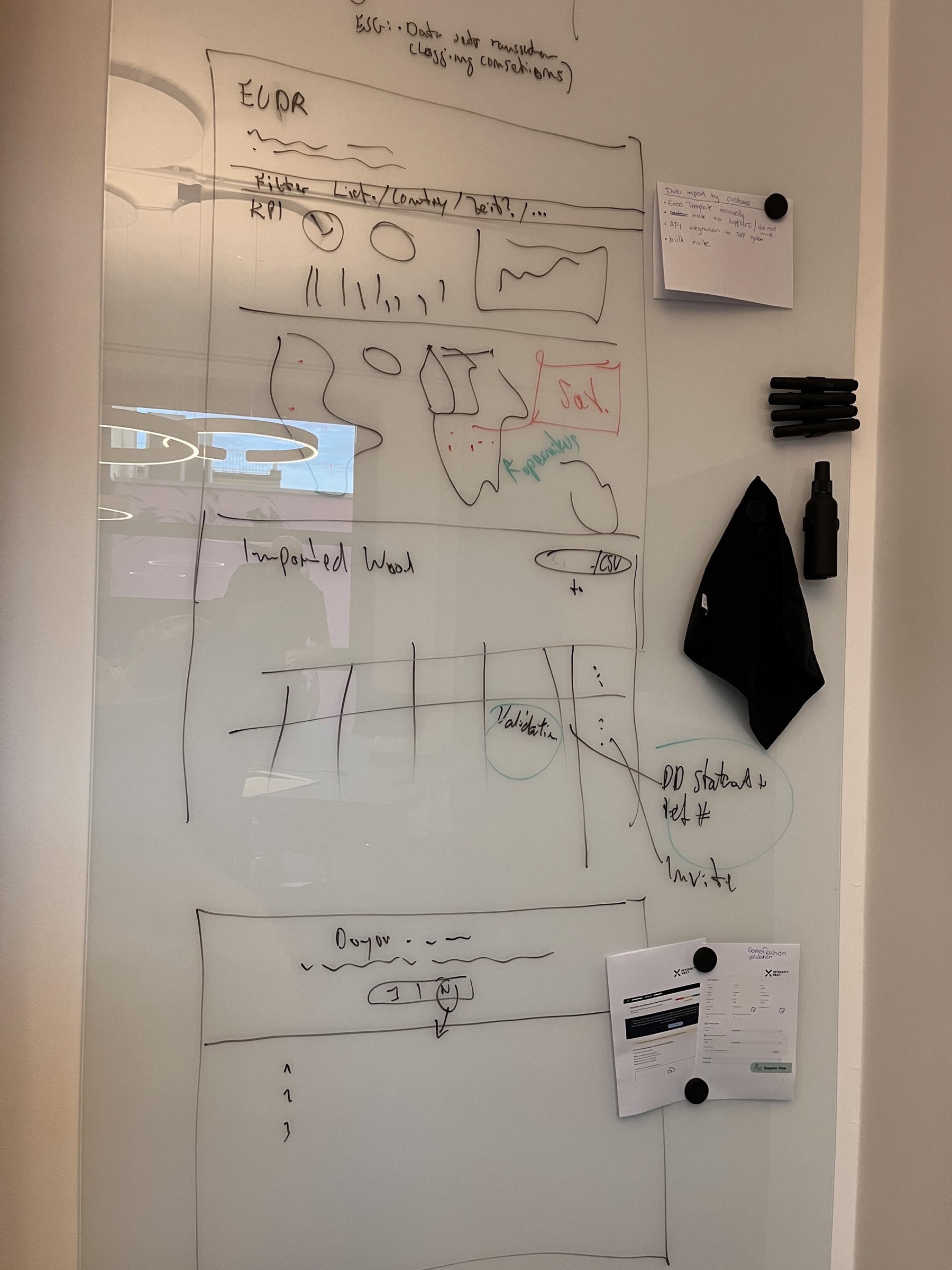
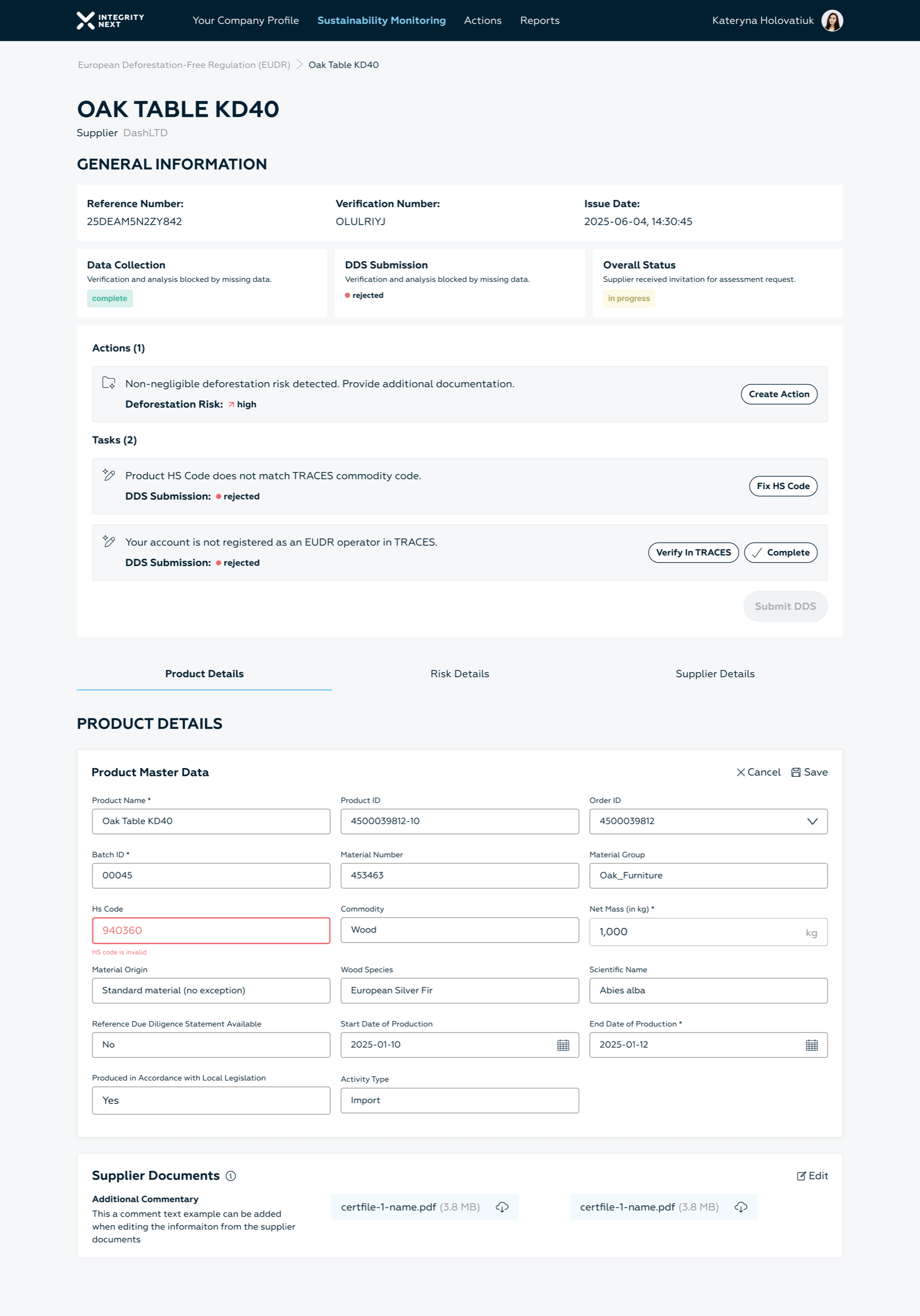
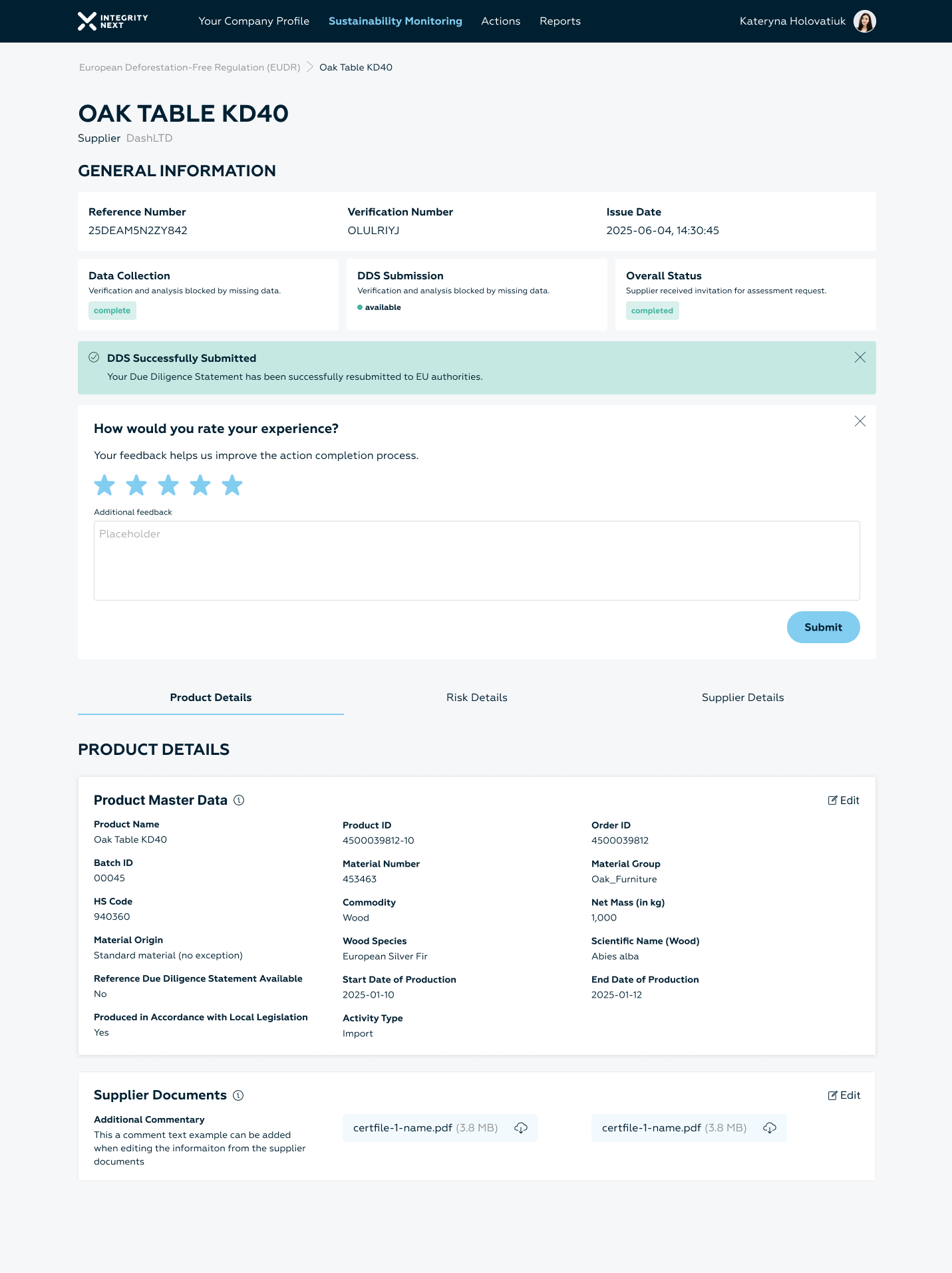
I designed the EUDR solution from scratch — a standalone regulatory product that helps companies identify EUDR-relevant deliveries, collect supplier geolocation and due diligence data, assess deforestation risk, and submit to the EU TRACES registry. It reused proven patterns from elsewhere in our platform, so it felt familiar to customers from day one.
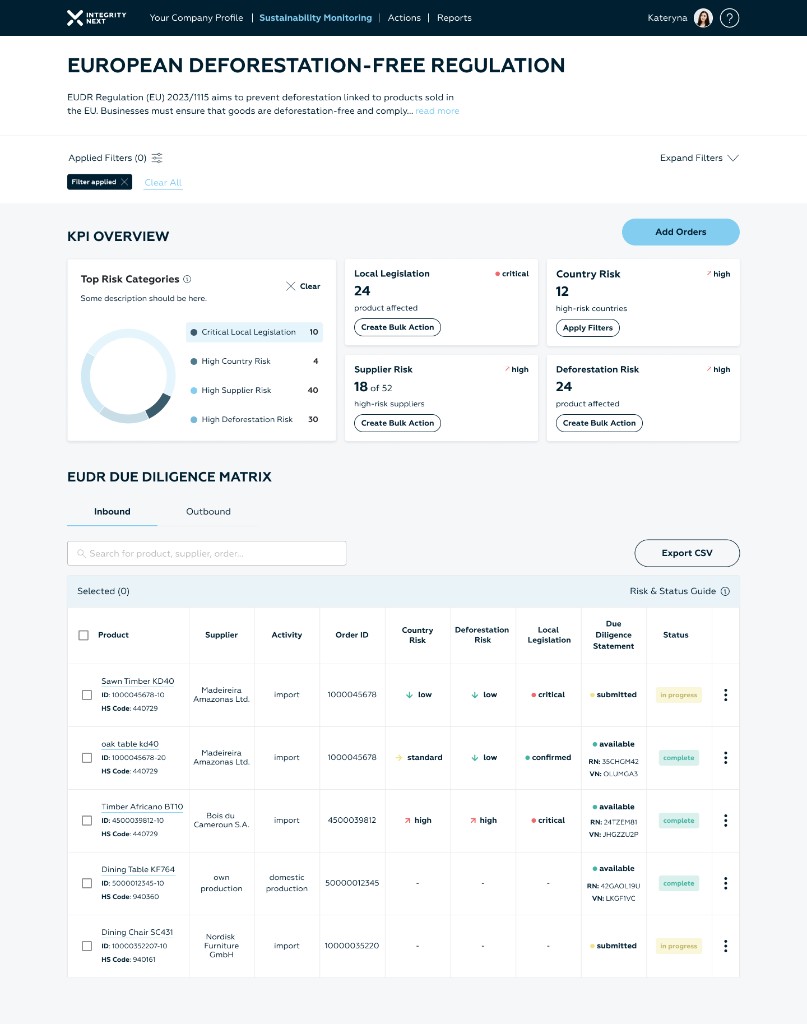
EUDR stands for the EU Deforestation Regulation. It's an EU law that says: if you sell products like coffee, cocoa, wood, or palm oil in Europe, you have to prove they weren't grown on land that was deforested. Companies now need to trace their products back to the actual farm or plot of land, and file that proof with an official EU system. I designed the software that helps companies do this.
The problem
From December 2024, any company selling cattle, cocoa, coffee, palm oil, rubber, soy, or wood products in the EU had to prove those products didn't come from recently deforested land. That meant tracing every shipment back to the exact GPS coordinates of the farm or plot it came from, and submitting that proof — a"Due Diligence Statement," or DDS — to TRACES, the EU's official system for these declarations.
The regulation demands precision — exact map coordinates for every plot of land, and a clear status trail from shipment to product to final declaration — but in practice, most suppliers work from spreadsheets, few have mapping (GIS) expertise, and for much of 2025–2026 companies weren't even sure when enforcement would actually start.
There was no EUDR dashboard, upload flow, status model, map, or supplier geolocation UX. The solution had to be designed as a standalone module — its own permissions, its own landing page for EUDR-only customers — while reusing platform infrastructure wherever it accelerated delivery.
Strong market, uneven depth
EUDR found a market quickly. The bigger challenge was converting early interest into deep, everyday usage while many customers waited on regulatory clarity before committing more effort.
| Signal | What it means |
|---|---|
| Strong pipeline | A high share of new deals included EUDR, with a strong win rate once in late-stage conversations |
| Browse vs. build | Most paying customers explored the module, but far fewer completed a full geolocation analysis in production |
| Regulatory pause | Several large paying customers explicitly on hold until EU enforcement clarity |
| Competitive opening | Our main competitor loses deals on complexity; our edge is credible simplicity |
Design implication: EUDR's positioning is regulatory deadline plus simplicity, not feature density. The product needed enough structure to feel trustworthy without overwhelming users with raw status columns across thousands of products.
What I designed
I owned EUDR end-to-end from early functional spec to shipped experience, working with product management, engineering, and compliance/regulatory stakeholders.
Visual examples
Click any image to enlarge
Impact
Shipped, selected:
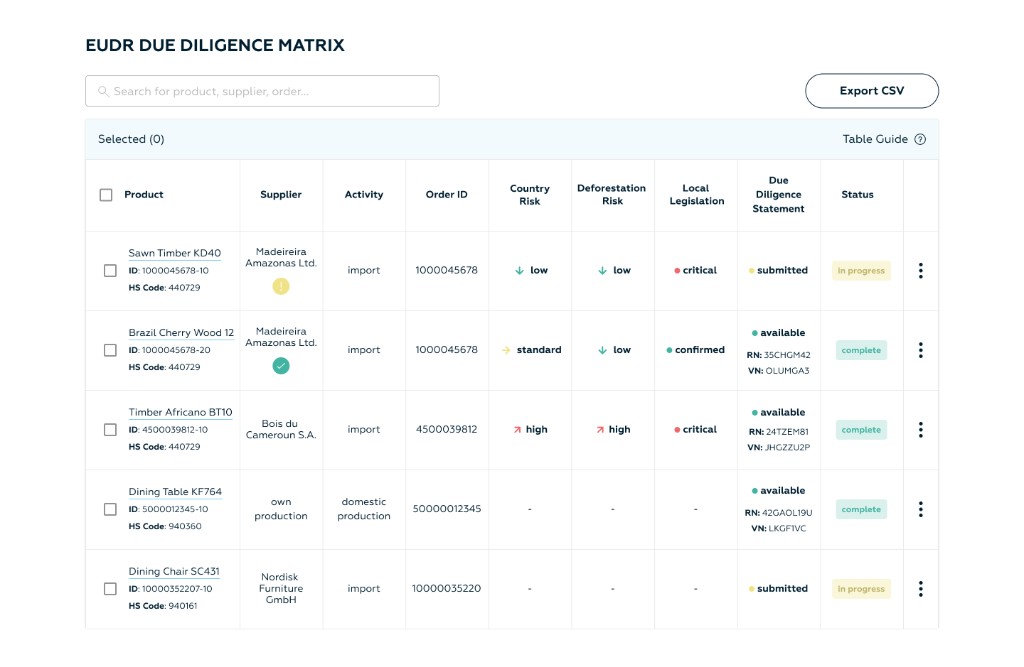
- EUDR dashboard and Deforestation Matrix with a full status model
- Shipment upload flow with supplier invitation automation
- Geolocation — map drawing and GeoJSON upload
- Dashboard filters and Action Status triage
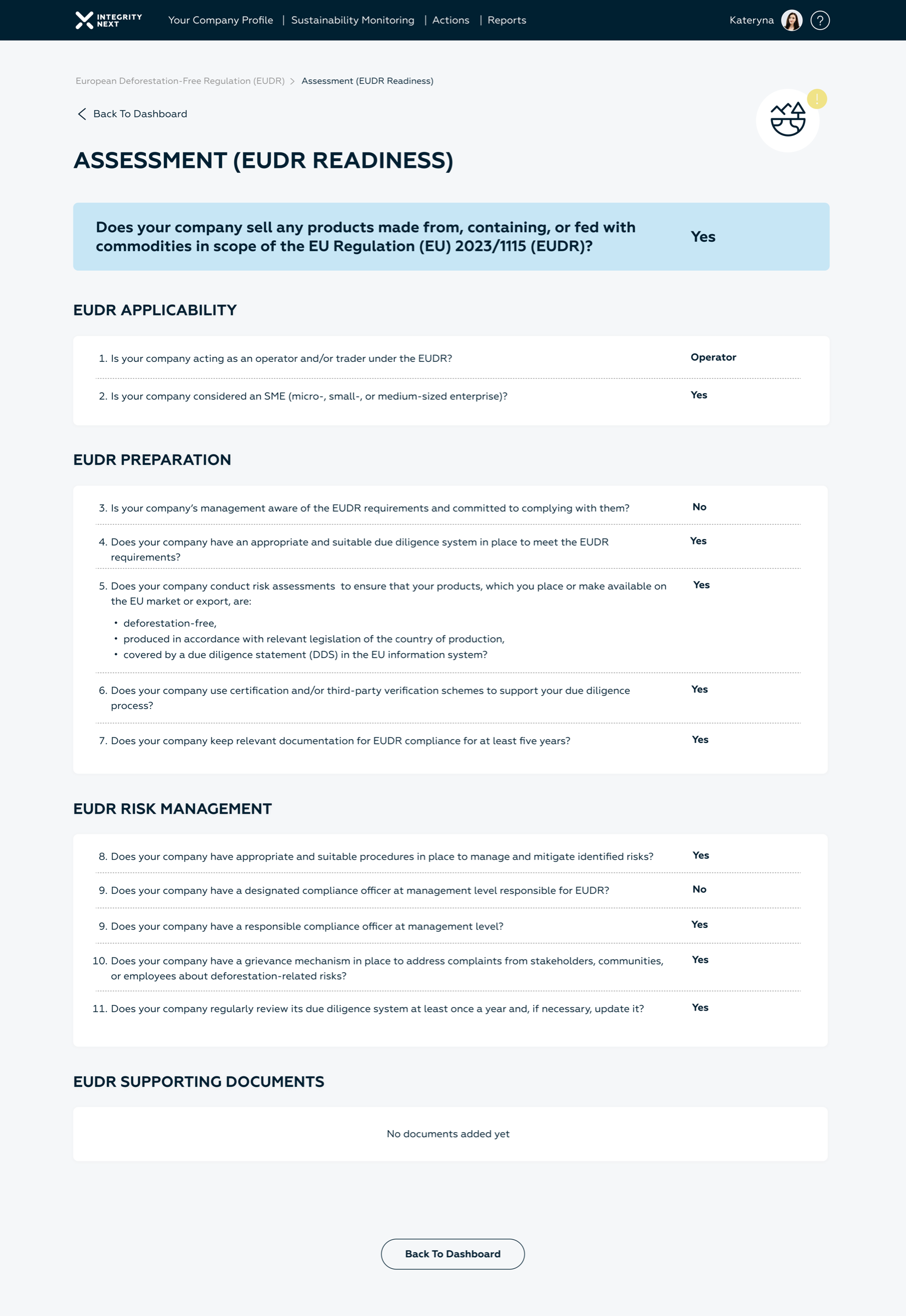
- Readiness Assessment v2, including the Role Finder wizard
- TRACES / DDS integration path and public API enhancements
Usage told a more nuanced story: most paying customers explored the module, but far fewer went on to complete a full geolocation analysis in production — many were still waiting on regulatory clarity before investing deeper effort.
Learnings
Regulatory products run on two clocks. Market urgency (sales) and customer readiness (usage) move independently — design for both, and don't assume one drives the other.
Reuse existing patterns to earn trust fast. Familiar filter and triage patterns let EUDR feel enterprise-grade on day one, instead of asking customers to learn something new.
Simplicity is the competitive moat. Against complex competitors on one side, and against lightweight tools on credibility and TRACES integration on the other.
Measure the funnel, not just the launch. Browse → upload → assessment → plot → DDS is where EUDR actually wins or loses — instrumentation matters as much as shipping.