Supply Chain
Visibility (SCV)
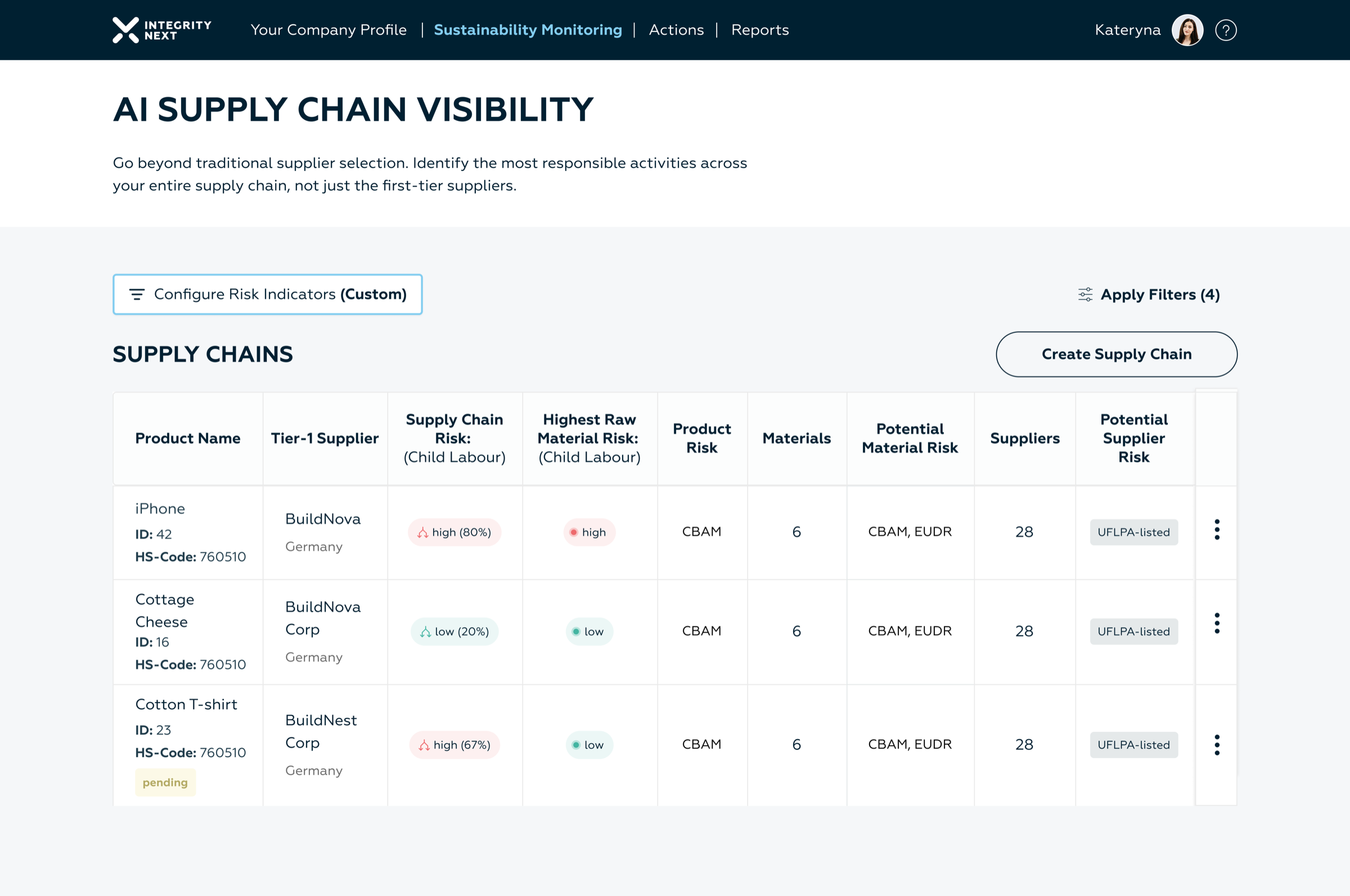
I designed Supply Chain Visibility from scratch — a new platform capability that helps compliance teams move beyond tier-1 supplier risk to see materials, upstream suppliers, and risks in deeper tiers, built on AI prediction and layered onto existing due diligence workflows.
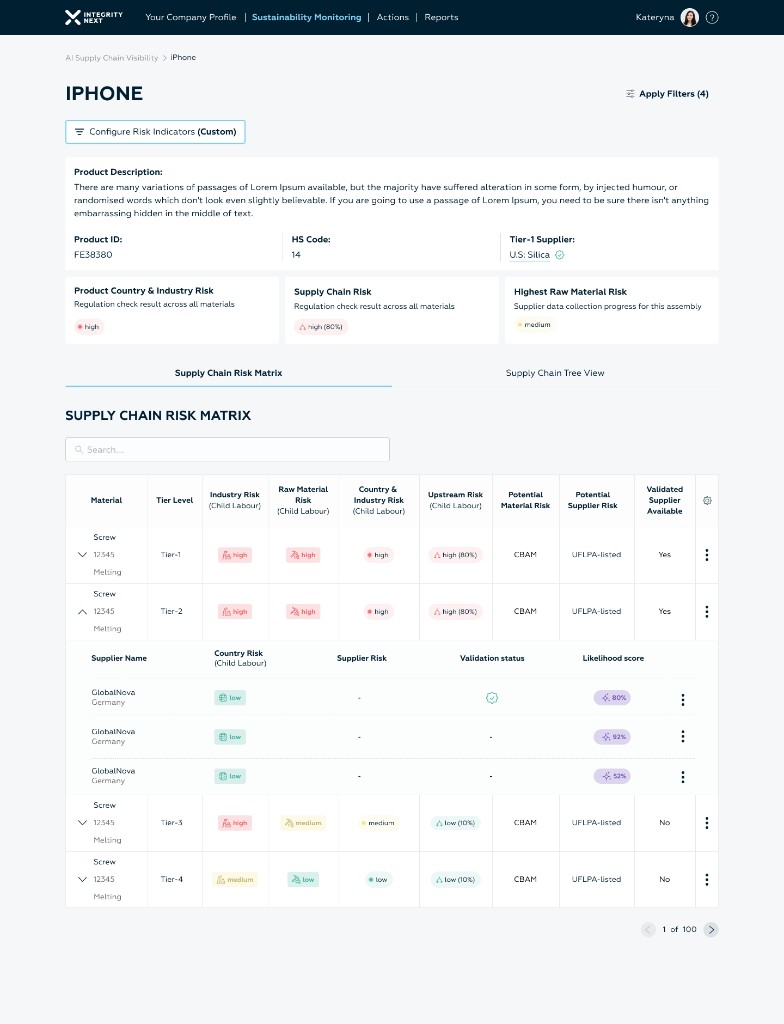
Big companies buy from suppliers, who buy from other suppliers, who buy from others — often five or more layers deep before you reach a raw material like cotton or cobalt. Most companies can only see their direct suppliers (tier 1). They have almost no visibility into tier 2, tier 3, and beyond — which is exactly where labor and environmental risks tend to hide. I designed the product that helps them see further up that chain, using AI to fill in the gaps where data doesn't exist yet.
The problem
IntegrityNext customers could already assess their direct, first-level suppliers through an existing due-diligence workflow — but that's as far as it went. What they couldn't do was answer a much harder question.
A wave of new regulations — covering supply-chain human rights due diligence, forced labor, and deforestation — created real demand for this deeper visibility. But most customers didn't have a detailed breakdown of what's actually in their products (a"bill of materials"), trade flows were hard to trace, especially for trade within the EU, and starting from a completely blank page felt impossible.
Users needed AI to get them started — but AI predictions without clear likelihood, validation, and risk framing felt untrustworthy.
| Before SCV | Gap |
|---|---|
| Existing supplier assessments (direct suppliers only) | No view of material hierarchy or upstream suppliers |
| Country / industry / ESG risk on known suppliers | No way to predict likely suppliers or process steps |
| Strong compliance workflows for known data | No value chain object — nothing to browse, configure, or act on |
There was no SCV product, no creation flow, no chain visualization, no risk overlay for deeper tiers. The capability had to be invented — concept, interaction model, and visual language — then positioned as a platform layer, not a standalone app.
What I designed
I owned SCV end-to-end from first spec to shipped experience, working with product management, engineering, and data science.
Visual examples
Click any image to enlarge
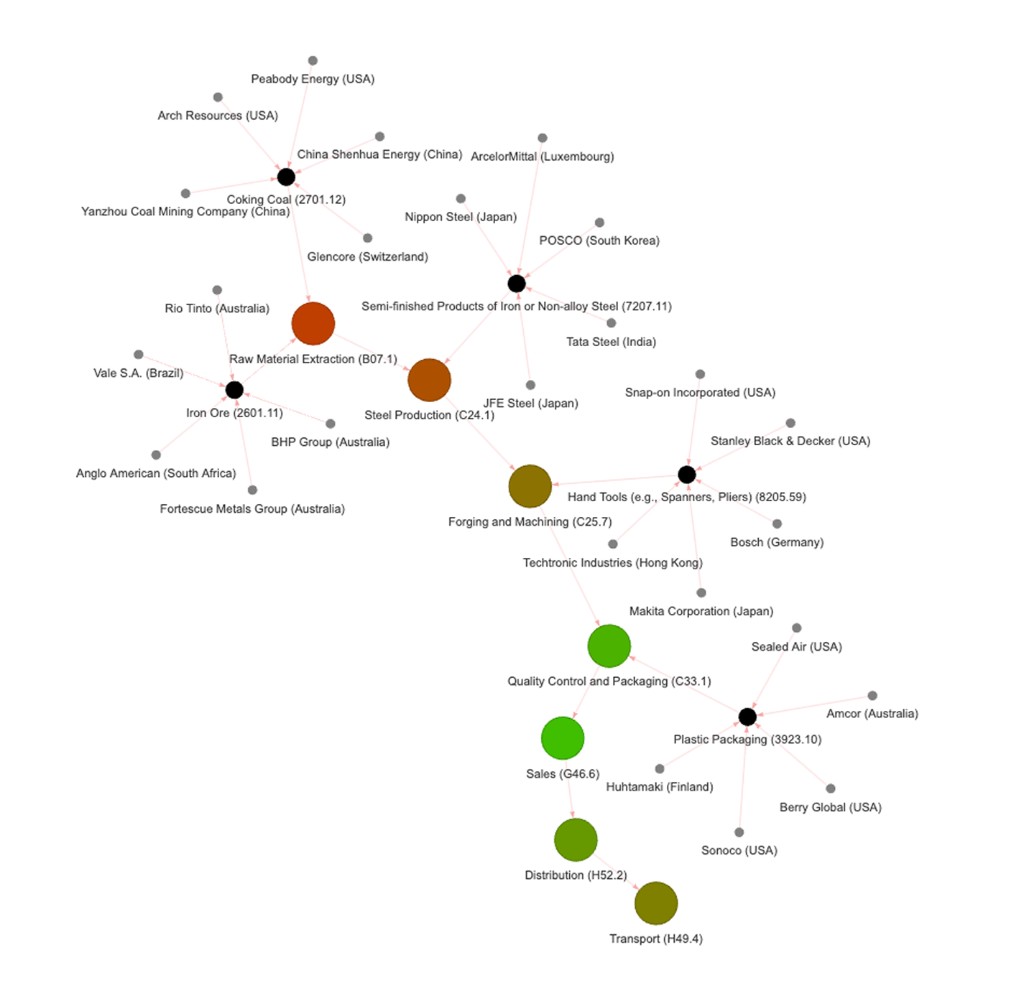
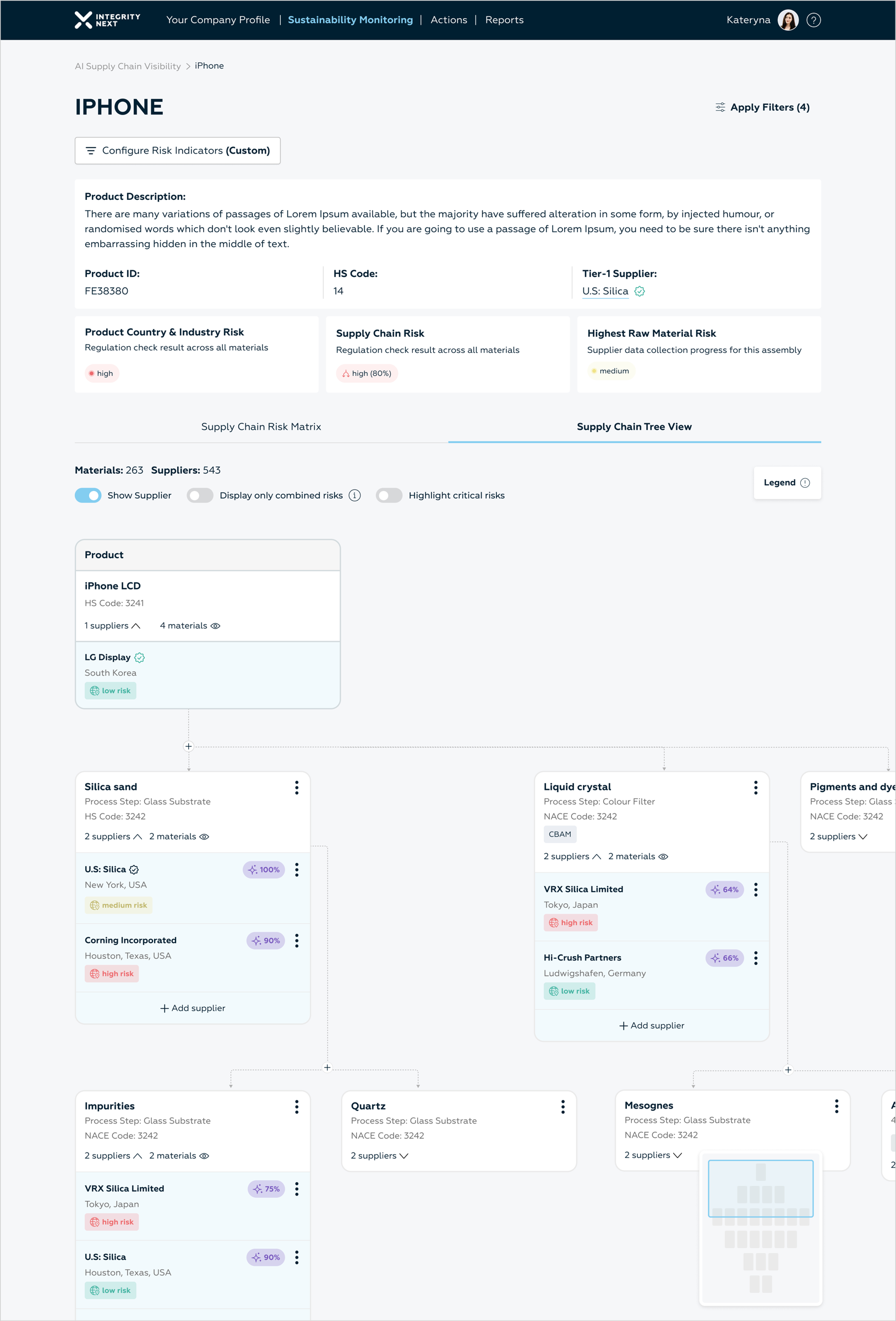
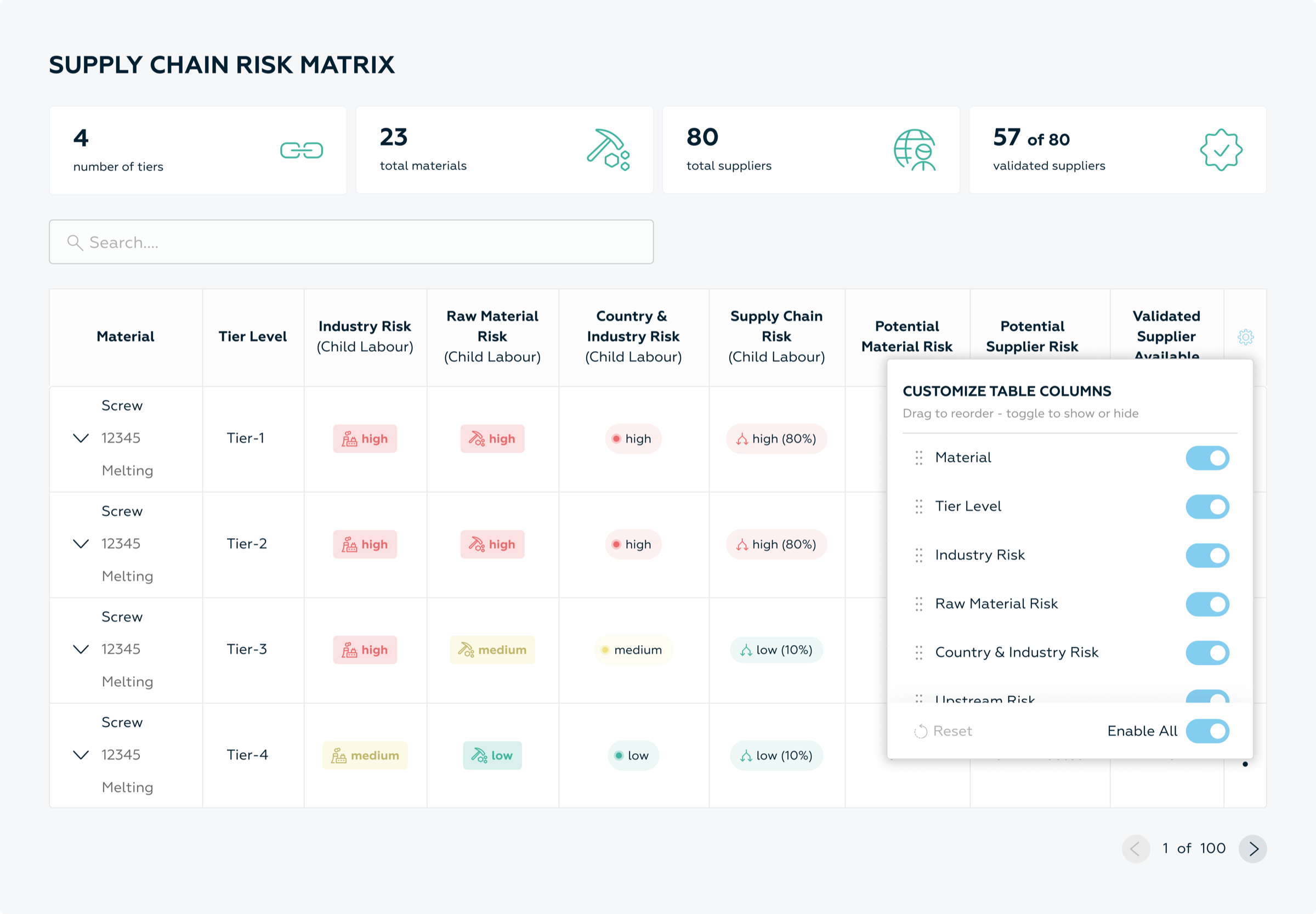
The key decision
Separate"build the chain" from"analyze the risk."
A clean tree first, then apply a saved risk lens to highlight what matters. Showing every risk on every node looked comprehensive on paper — but it failed the moment we tested it against real, deep hierarchies.
Feedback → decisions
| Source | What we heard | Design decision |
|---|---|---|
| Early product spec, 2024 | Need a demo-ready chain from just a product name | Progressive creation — one step at a time, not one overwhelming screen |
| Sales / Customer Success | "Is this real?" on predicted suppliers | Likelihood scores plus hover tooltips, later full validation states |
| Product + compliance team | Users reconfigure risk views every session | Custom Risk Views — save and share configurations for common risk types, like forced labor or conflict minerals |
| A related product team | "Where do products come from?" comes up outside SCV too | Designed for embeddability — SCV as a layer other products can point to |
Impact
Shipped, selected:
- Value chain creation, display, and risk calculation across industry, raw material, and country
- Custom Risk Views, letting teams save and reuse risk configurations
- Improvements to material and product-classification predictions
- Integration with existing supplier assessments — tier-1 chains, supplier tab, bulk import
- Risk coverage extended across several major regulations covering forced labor, deforestation, and conflict minerals
Learnings
Building something new means shaping perception, not just features. Part of the job was being just as clear about what the product doesn't do as what it does.
AI UX means progressive disclosure plus explicit uncertainty. Likelihood, validation, and saved lenses beat trying to show everything at once.
Platform features need a home in the workflow. SCV works when it sits inside existing due-diligence workflows — not when users have to hunt for a separate solution.
Measure behavior, not just shipping. Low Custom Risk View saves and browse-only paying users pointed directly to where to invest next — aggregation, table views, auto-populating from existing product data.